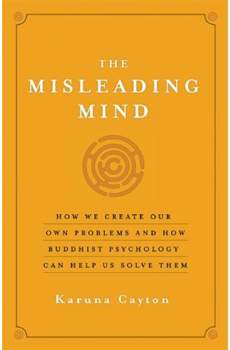
To everyone who has ever gone to a therapist, bought a self-help book, consulted an astrological chart, or cracked open a fortune cookie in hopes of feeling happy, The Misleading Mind offers a radical message. We can achieve lasting emotional health, and we can take responsibility for it ourselves, but only if we learn to master the nasty tricks our minds naturally play on us. The more we explore, understand, and even come to appreciate our own self-destructive mental attitudes, the more control we'll gain over our minds, and the more authentic and wonderful our lives will be.As thousands of years of Buddhist psychology teaches us, unhappiness is fundamentally a subjective state. To overcome problems and achieve lasting happiness, we must look inward and understand how we continually thwart our own well-being by giving in to feelings and thoughts that cause us pain. By taking control of our minds and engaging these destructive feelings and thoughts head-on, we can eliminate them from our lives, alleviate suffering, and reach our true potential.
Offering psychological insights from ancient texts and drawing on real-life examples from Karuna Cayton's therapy and coaching practice, as well as his years living in Buddhist Nepal, the book argues that lasting happiness requires a longer-term approach than Western psychology typically presumes.
By exploring a basic Buddhist tenet - that we have an innate capacity to be free of problems, and therefore happy - the book methodically explores the nature of problems and how they take root in our lives. In clear, lively prose, the book then shows readers how they can put themselves on a gradual path toward identifying unhelpful thought patterns that contribute to their own problems. With the aid of anecdotes, exercises, and helpful advice, readers learn to study and understand their problems better, to take firm ownership over them, to transform them, and ultimately, to translate their new awareness into action in the world.