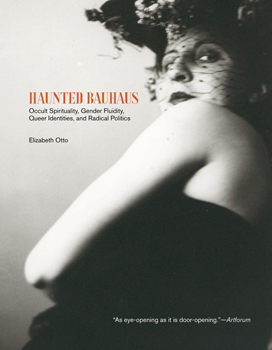
An investigation of the irrational and the unconventional currents swirling behind the Bauhaus' signature sleek surfaces and austere structures.
The Bauhaus (1919-1933) is regarded as the 20th century's most influential art, architecture and design school, celebrated as the archetypal movement of rational modernism and famous for bringing functional design to the masses. Here art historian Elizabeth Otto uncovers a movement that is more diverse and paradoxical than previously assumed. Otto traces the trajectories of the school's engagement with occult spirituality, gender fluidity, queer identities and radical politics. The Bauhaus is haunted by these untold stories.
The Bauhaus is often associated with famous artists, architects and designers - Paul Klee, Walter Gropius, László Moholy-Nagy and Marcel Breuer. Here Otto reclaims the marginalized lives and accomplishments of many of the 1,200+ Bauhaus teachers and students (the so-called Bauhäusler). Otto reveals Bauhaus members' spiritual experimentation, expressed in "spirit photographs"; their explorations of masculinity and emerging female identities; the "queer hauntology" of certain Bauhaus works; and the radical politics on the left and the right - when some Bauhäuslers worked for the revolution and, later, for the Nazis.